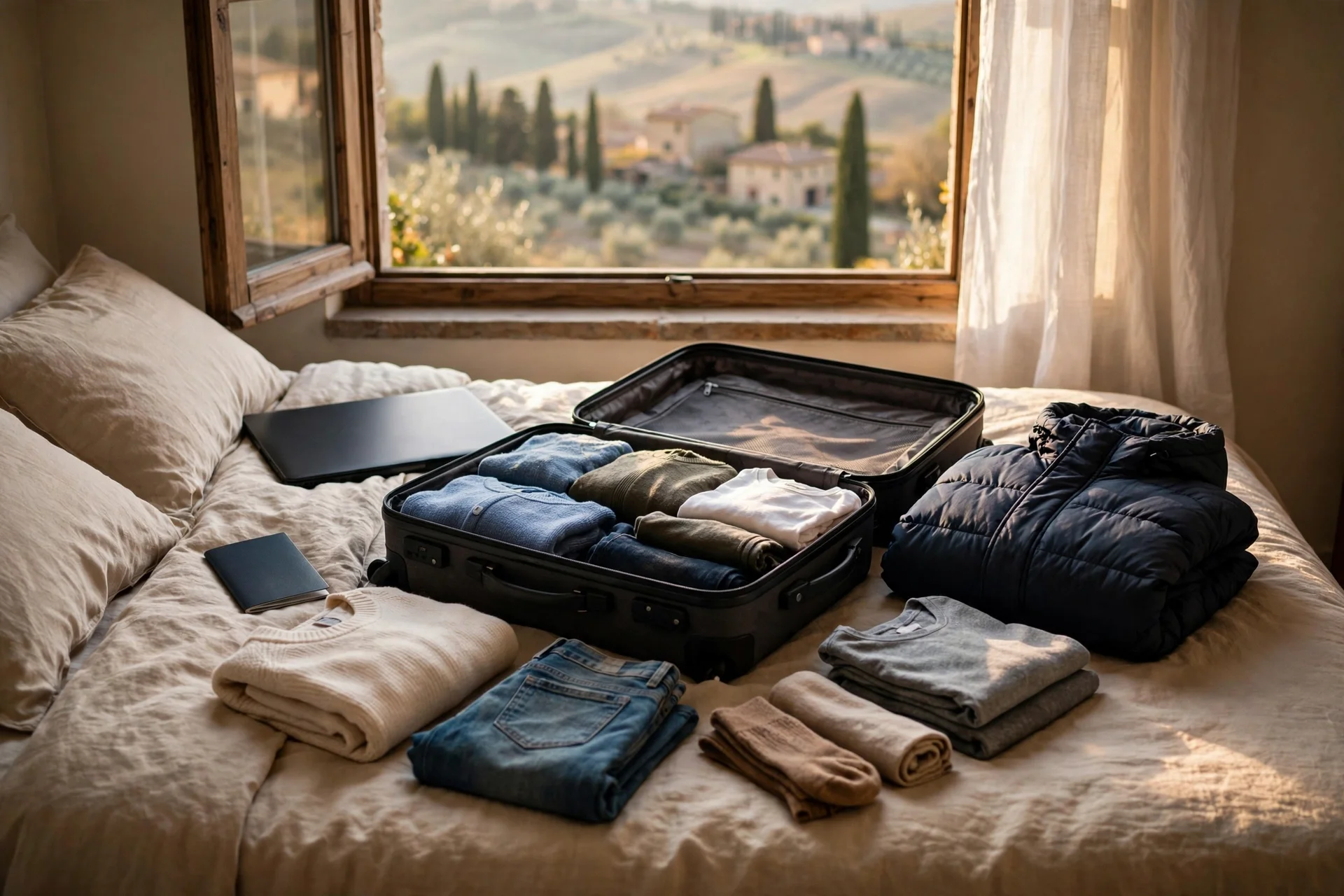
What to Pack for Studying in Italy: The Smart Start
Figuring out what to pack for studying in Italy can feel overwhelming, especially when your whole life needs to fit into one or two suitcases. The good news is that Italy is not a remote outpost: almost everything you forget can be bought in Arezzo or any Tuscan city. The trick is knowing what is expensive or hard to find locally, what belongs in your carry-on, and what should stay home.
This 2026 packing checklist for international students covers the essential documents, clothing for Tuscany's real seasons, electronics, health items and the small comforts that make the first weeks easier.
What to Pack for Studying in Italy: Documents First
Documents are the one category you cannot replace easily, so keep originals and copies in your carry-on, never in checked luggage.
- Passport with your student visa, plus two printed copies and a digital scan stored in your email.
- University acceptance letter and pre-enrollment confirmation.
- Health insurance proof or your European Health Insurance Card.
- Income and scholarship documents: DSU and tuition-waiver applications require income certificates, often translated and legalized. Bring originals.
- Degree certificates and transcripts, with any required translations and the Declaration of Value if your consulate requested it.
- Passport-size photos: you will need them for the residence permit, the student card and various registrations.
- Prescriptions and medical records in English or Italian if you take regular medication.
Make a second set of copies and leave them with a family member at home, just in case.
Clothing for Tuscany: Pack for Real Seasons
Arezzo and inland Tuscany have genuine seasons. Winters can drop near freezing with damp, foggy mornings, while summers regularly pass 35 degrees. Pack in layers rather than for one climate.
Autumn and winter essentials
Bring a warm waterproof coat, not just a fashion jacket. Layer with sweaters, thermal underwear for January and February, a scarf, gloves and a hat. Waterproof boots with good grip matter because historic town centers have steep, slippery stone streets in the rain.
Spring and summer
Light breathable clothing, a swimsuit for the Tuscan coast or the lakes, sunglasses and a hat. Bring comfortable walking shoes: you will walk far more than you expect, and cobblestones destroy thin soles.
Everyday university wear
Italian students dress smartly casual. One or two slightly dressier outfits are useful for presentations, exams and thesis defenses. Formal academic dress is not required, but looking neat counts.
Electronics and Adapters
Italy uses type L power sockets (three round pins) and 230V. Bring a universal adapter and, if you have many devices, a compact power strip from home plus one adapter for it.
A reliable laptop is essential: many courses run on digital platforms, and libraries have limited loan laptops. Bring an external hard drive or set up cloud backup before you fly. Noise-canceling headphones are worth their weight in shared apartments.
Your phone will work, but roaming is expensive long-term. Plan to get an Italian SIM card as a student in your first week: it takes about twenty minutes and a passport.
Health and Personal Care
Pack a three-month supply of any prescription medication with the prescription translated into English, plus a basic first-aid kit: painkillers, plasters, antihistamines and anything you know works for you. Italian pharmacies are excellent, but brand names differ and pharmacists may not recognize foreign prescriptions for all medicines.
Contact lens wearers should bring a good supply of lenses and solution; specific brands can be hard to find in smaller cities. The same goes for specialty skincare or hair products: standard international brands are available, but niche ones often are not.
Money Matters: Cards, Cash and Accounts
Bring a debit or credit card that works internationally and check the foreign transaction fees before departure. Carry a small amount of euros in cash for the first days: taxis, the post office and small shops are not always card-friendly.
Within your first weeks, open a bank account in Italy. Landlords, scholarship offices and employers all prefer Italian bank transfers, and having a local IBAN makes rent and the residence permit process smoother.
What to Leave at Home
Do not pack your entire wardrobe: you will buy clothes in Italy, often cheaply during the January and July sales. Leave bulky items like bedding and kitchenware; student housing and shared apartments usually provide the basics, and IKEA-style stores exist in every region.
Skip the hairdryer and other heating appliances unless they support 230V; cheap Italian models cost less than a voltage converter. And leave the "just in case" items: after one semester, most students admit they used half of what they brought.
The Comfort Items Worth the Space
A few personal things make the first month easier: photos, a familiar blanket or pillowcase, snacks from home for the first homesick evening, and a small gift from your country for your first Italian friends. These weigh almost nothing and matter more than a third pair of jeans.
Finally, pack patience and flexibility. The first weeks involve queues, paperwork and surprises, but every international student before you has managed them. Prepare well, travel light, and you will settle in faster than you think.
Ready to begin? Apply to study at Università Verde di Toscana and join international students arriving in Arezzo for the 2026/27 academic year.