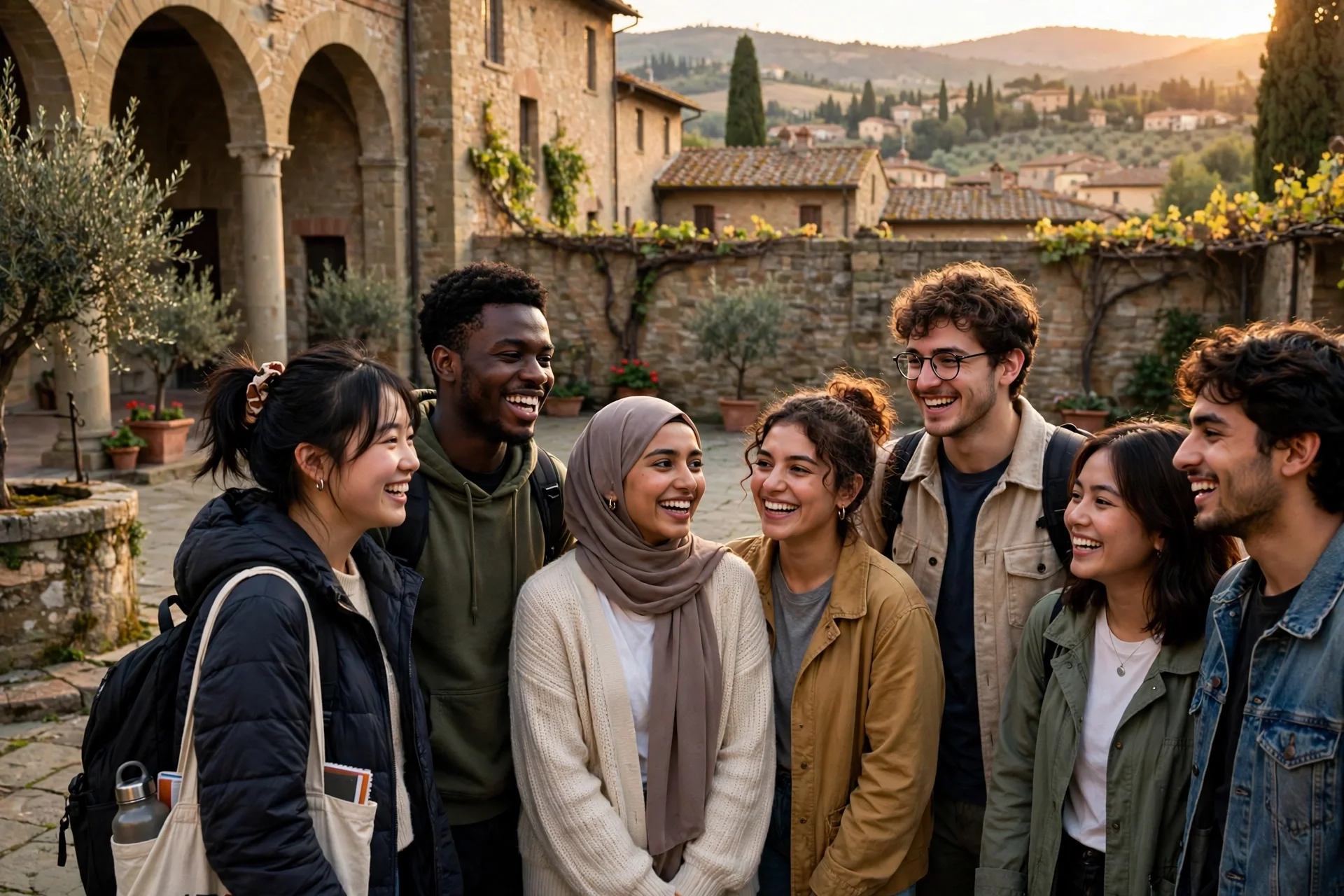
Not ready to commit to a full degree abroad, but curious what studying in Italy actually feels like? Summer schools in Italy give you the answer in two to six weeks: real university courses, transferable credits, classmates from around the world, and a summer you will remember for decades. This 2026 guide explains what these programs are, what they cost, how to choose the right one, and how to apply before the spring deadlines close.
Summer Schools in Italy: What They Are and Who They Are For
A summer school is a short, intensive study program run by a university, academy, or cultural institute, usually between June and September. Most summer schools in Italy last from two to six weeks and combine classroom teaching with field trips, workshops, and cultural activities. Many award ECTS credits, the European credit system used by Italian universities, so the work you do in July can count toward your degree back home.
These programs suit several kinds of students. Undergraduates use them to earn credits, explore a subject outside their major, or test whether Italy is the right place for a full degree later. Recent graduates join to build a skill, strengthen a portfolio, or add an international line to their CV before job hunting. If any of that sounds like you, a summer program is one of the lowest risk ways to study abroad.
What You Can Study at an Italian Summer School
Italian summer programs cover far more than language courses. Here are the most popular tracks for 2026.
Italian Language and Culture
The classic choice, and still the most popular. Intensive language courses run at every level from absolute beginner to advanced, often paired with cooking classes, cinema evenings, and guided walks through historic centers. Two to four weeks of immersion can move you up a full CEFR level, which is a serious head start if you later apply for a degree taught in Italian.
Art, Design, and Architecture
Italy is the obvious classroom for these subjects. Summer programs in Florence, Rome, Milan, and Venice offer studio courses in drawing, photography, fashion design, interior design, and restoration. Students leave with a portfolio of work made in the country that shaped these disciplines.
Business, Economics, and Fashion Management
Milan and Rome host short programs in international business, marketing, luxury brand management, and entrepreneurship. These courses lean heavily on company visits and guest lectures from industry professionals, which makes them valuable for networking as well as learning. Many are taught entirely in English and welcome students from any academic background.
Science, Sustainability, and Food Studies
A growing category, and one close to our own mission. Programs in environmental science, sustainable agriculture, renewable energy, and food culture take advantage of Italy's farms, vineyards, and research centers as living laboratories. If you study biology, agronomy, environmental engineering, or nutrition, a summer in the Tuscan countryside can be directly relevant to your degree.
How Much Do Summer Schools in Italy Cost?
Prices vary widely, so it helps to know the typical ranges for 2026. A two week language and culture program at a university language center usually costs between 600 and 1,200 euros for tuition, with accommodation adding 400 to 900 euros depending on the city. A four week credit bearing program with housing included generally falls between 2,000 and 4,500 euros.
Always check what the fee covers. Some programs bundle tuition, housing, meals, excursions, and insurance into one price, while others quote tuition only and leave you to arrange everything else. Compare the full package, not the headline number. Also budget for flights, daily expenses, and the small costs nobody warns you about, like residence paperwork if your program exceeds 90 days, which most summer programs do not.
Scholarships and Fee Reductions Worth Knowing
Summer programs are shorter and cheaper than degrees, but funding still exists. Many universities offer early bird discounts of 10 to 20 percent for applications submitted before February or March. Merit based partial scholarships are common, usually awarded on grades or a short motivation statement. Some Italian regions and cultural institutes run dedicated summer grants for international students, and your home university may have mobility funds that cover short programs even when they do not fund full exchanges.
The strongest strategy is simple: apply early, apply to more than one program, and ask directly about scholarship options. A polite email costs nothing and regularly pays off.
How to Choose the Right Summer School
With hundreds of programs on offer, use these criteria to narrow the list:
Credits and recognition. If you want the credits to count at home, confirm the program awards ECTS and get written approval from your home university before you pay anything.
Teaching language. Many programs run in English, but some are Italian only or bilingual. Match the language to your level so you learn instead of struggle.
Class size and schedule. Small groups mean more feedback and more contact with professors. Check weekly teaching hours too: 15 hours of class plus excursions beats 30 hours of lectures for most students.
Location and housing. A program in a smaller city like Arezzo often means lower living costs, a calmer study environment, and easier access to places like Florence, Siena, and Rome for weekend trips from Arezzo. Confirm whether housing is included or just recommended.
Dates and deadlines. Popular programs fill by March or April. Decide by January, apply by February, and you will have your pick of options instead of leftovers.
Application Timeline for Summer 2026
Here is a practical calendar if you want to spend summer 2026 in Italy. In November and December, research programs and shortlist three to five that fit your goals and budget. In January, contact coordinators with questions and confirm credit recognition with your home university. In February and March, submit applications along with any scholarship requests, since funding deadlines usually close before program deadlines. In April, accept your offer, arrange housing if it is not included, and book flights while prices are still reasonable. In May, handle the practical side: travel insurance, a valid passport, and checking whether your nationality needs a visa for a short stay. By June, you are ready to fly.
Turn a Summer Into a Longer Plan
A summer school is a taste, but for many students it becomes the first step toward something bigger. If your weeks in Italy convince you that a full degree is the right move, you will already have contacts, language skills, and firsthand knowledge of the system. Students who loved the experience often return for a semester exchange, a gap year in Italy, or a full bachelor's or master's program with scholarship support.
That longer path is exactly what we help with every day. If your summer in Italy leaves you wanting more, start your application to Università Verde di Toscana and explore degree programs, 100% tuition waivers, and DSU regional scholarships for international students. Summer 2026 could be the beginning of your Italian education, not just a memory of it.