Study in Italy for Ghanaian students is becoming one of the most attractive routes to a respected European degree in 2026. Italy combines affordable public university tuition, a growing number of English taught programs, generous regional scholarships, and a student lifestyle shaped by history, food, and warm Mediterranean weather. For students from Accra, Kumasi, Takoradi, and across Ghana, the path is clear and achievable when you plan early, prepare strong documents, and apply before the deadlines.
This guide explains every step in plain language: how to choose a program, what admission offices expect from Ghanaian applicants, how the DSU Toscana scholarship can cover tuition and living costs, how to handle the visa process, and what daily life in Arezzo and Tuscany really looks like. By the end, you will know exactly what to do next and when to do it.
Why Ghanaian students choose Italy
Italy offers something few study destinations can match: world class universities at public tuition levels that are often lower than a single semester elsewhere. Many bachelor's and master's programs are now taught fully in English, so you do not need to speak Italian before you arrive, although learning basic Italian will make daily life much easier and more enjoyable.
Italian universities have centuries of history in law, medicine, engineering, architecture, economics, agriculture, and the arts, and a degree from Italy is recognised across Europe and respected worldwide. Add affordable living costs outside the biggest cities and a safe, walkable student town like Arezzo, and the appeal becomes easy to understand.
Study in Italy for Ghanaian students: admission requirements
Admission requirements depend on the level you apply for, but the core documents are similar for most Ghanaian applicants. For a bachelor's degree, you need your West African Senior School Certificate Examination (WASSCE) results, or an equivalent senior high school qualification, plus a transcript from your school. For a master's degree, you need your bachelor's degree certificate and transcript from a recognised university in Ghana or abroad.
Most universities also ask for a valid passport, a motivation letter, a curriculum vitae, and proof of English proficiency, usually IELTS, TOEFL, or a university English test, unless your previous education was in English and the university waives the test. Some programs, especially in medicine, architecture, and engineering, require an entrance test or an interview. Read the call for applications carefully, because each university sets its own deadlines and document rules.
Declaration of value and pre-enrollment
One document Ghanaian applicants often overlook is the declaration of value. This is an official statement issued by the Italian diplomatic authorities that confirms your Ghanaian qualification is valid for university admission in Italy. You will usually request it through the Italian Embassy in Accra after your documents have been legalised. Start this process early, because legalisation and embassy appointments can take weeks.
After you receive an admission offer, you must complete pre-enrollment through the Universitaly portal. Pre-enrollment is the formal step that connects your application to the Italian visa process. Keep copies of every submission, receipt, and email, and check your inbox regularly for messages from the university and the embassy.
English taught programs to consider
English taught programs are now available in business, economics, computer science, engineering, international relations, agriculture, environmental science, and design. These programs let you study in English while learning Italian for daily life and part time work.
DSU Toscana scholarship 2026: tuition waiver and living support
The DSU Toscana scholarship 2026 is one of the strongest reasons to study in Tuscany. DSU Toscana is the regional body that supports the right to study, and eligible students can receive a full tuition waiver plus benefits that may include free or subsidised accommodation, free meals at university canteens, and a yearly cash grant based on financial need and academic merit.
Eligibility depends on your family income, documented through financial certificates from Ghana, and on meeting academic requirements once you enroll. The application window is limited, and documents must be translated, legalised, and submitted exactly as requested. Prepare your income documents well before the call opens, ask the university international office for the current checklist, and submit early so you have time to correct any missing paper.
Tuition fees and cost of living
Public university tuition in Italy is based on family income and program, and for many international students it falls between a few hundred and a few thousand euros per year. This is far below tuition in the United Kingdom, the United States, or Australia. Private universities cost more, so compare total costs before you choose.
Living costs in Arezzo are lower than in Rome, Milan, or Florence. A careful budget for shared accommodation, food, transport, and study materials is manageable, especially with canteen meals and student discounts. Plan also for flights, visa fees, insurance, document legalisation, and a housing deposit.
Italy student visa steps for Ghanaian applicants
Once you have pre-enrolled and received your admission documents, apply for a study visa at the Italian Embassy in Accra. You will normally need your passport, admission letter, pre-enrollment summary, proof of accommodation in Italy, proof of financial means, health insurance, and your academic documents with legalisation and declaration of value where required.
Book your visa appointment as soon as pre-enrollment allows, because slots fill quickly during the summer intake. Attend with originals and copies, answer honestly about your study plan, and after arrival apply for your residence permit within eight working days, following your university international office instructions.
Student life in Arezzo and Tuscany
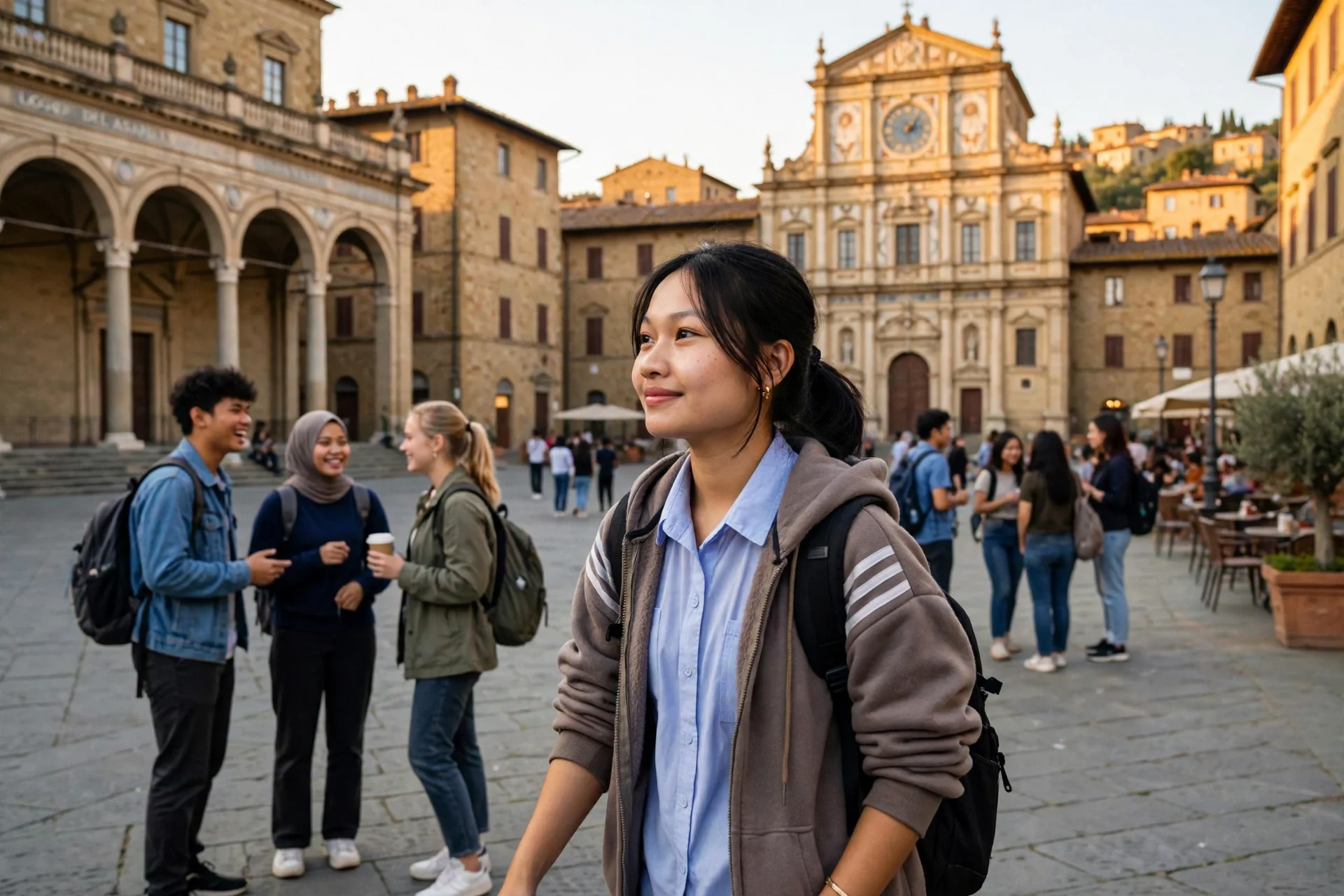
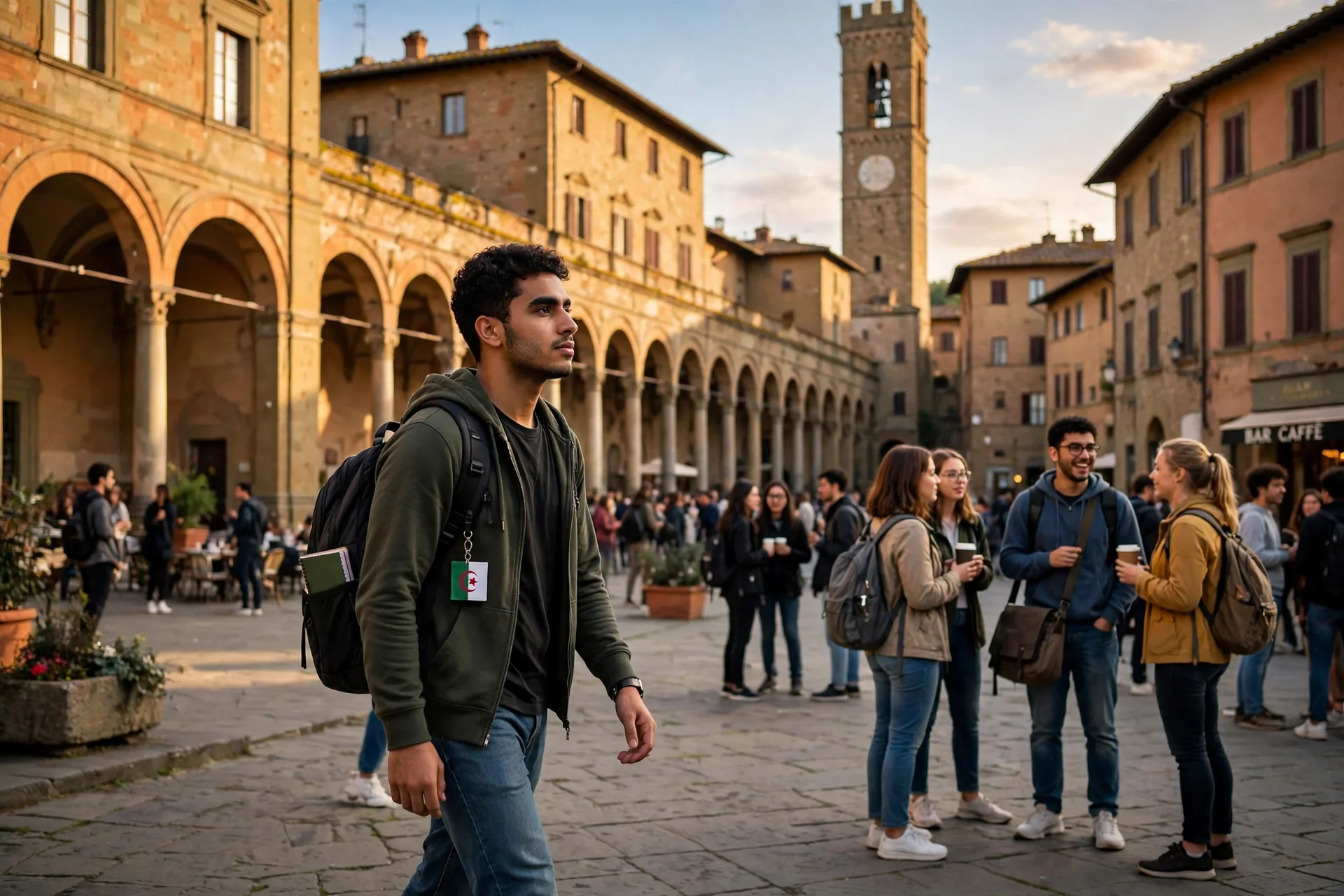
Arezzo is a historic Tuscan town with medieval streets, lively piazzas, weekly markets, and a strong sense of community. It is smaller and calmer than Florence, which means shorter commutes, lower rents, and a town where shopkeepers and neighbours quickly recognise you. Trains connect Arezzo to Florence in about an hour, and to Rome in under two hours, so weekend trips across Italy are easy and affordable.
Student life includes university sports, language exchange evenings, and cultural festivals, and Ghanaian and African student communities across Tuscany will help you settle faster and build lasting friendships.
Working while you study
International students in Italy may work part time within the limits set by their residence permit, usually up to 20 hours per week. Part time work in tutoring, hospitality, campus services, or delivery can help with daily expenses, but it should never replace your study plan. Focus first on your grades, because scholarship renewal and future visa renewals depend on academic progress.
Application checklist for 2026
- Choose 2 to 3 programs that match your qualifications and budget, and note every deadline.
- Prepare your WASSCE results or degree documents, transcripts, passport, CV, and motivation letter.
- Request document legalisation and the declaration of value early through the proper authorities.
- Apply to the university, complete pre-enrollment on Universitaly, and prepare your DSU Toscana scholarship application.
- Book your visa appointment, arrange accommodation and insurance, and plan your arrival in Arezzo.
Italy rewards students who plan ahead and submit complete, honest applications. If you start now and gather your documents step by step, studying in Tuscany in 2026 is fully within reach. To take the next step, start your application and prepare your documents for the upcoming intake.